How to Clean Up Mold in Your Home: A Step-by-Step Guide
Most mold cleanup advice gives you a list of cleaners and sends you off to scrub. That's why mold keeps coming back. Cleaning the surface you can see is only one of three jobs, and it's the one that fails first if you skip the other two.
Mold cleanup is three jobs, done in order:
Stop the water
Mold can't grow without moisture. If you don't fix the source, every other step is temporary.
Remove the mold you can see
Physically clean it off hard surfaces, or cut out and replace porous materials it has grown into.
Clear the spores you stirred up
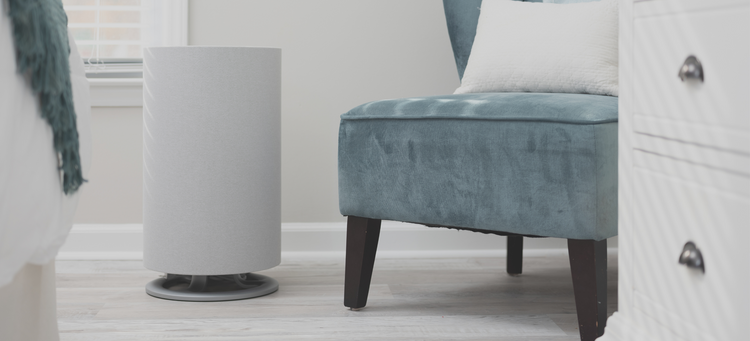
Cleaning mold throws millions of spores into the air. A HEPA air purifier captures them before they settle and start the cycle again.
Do all three and the mold is gone. Skip the water and it regrows. Skip the air and you keep breathing spores and re-seeding the room. The rest of this guide walks through each job, plus exactly what to use on each surface and when to stop and call a professional.

Before you start: safety and the DIY line
A few rules keep mold cleanup from making things worse.
- Protect yourself. Wear an N95 respirator, gloves, and eye protection. Disturbing mold sends spores airborne, and the cleanup is when your exposure is highest.
- Ventilate the area, but contain it. Open a window in the room you're working in and close the door to the rest of the house so spores don't spread. Run an air purifier in the room (more on that below).
- Never mix bleach and ammonia. Combined, they release chloramine gas, which is toxic. This is the single most dangerous mistake in DIY mold cleanup — and a reason to keep your cleaners simple.
- Know when it's too big to DIY. The EPA's guidance is the standard most professionals use: if the moldy area is larger than about 10 square feet (roughly a 3-by-3-foot patch), or if it's in your HVAC system, or if it followed sewage or contaminated water, hire a professional remediation company. Below that threshold, most household mold is a manageable DIY job.
If you're not sure how bad it is, that uncertainty is usually a sign the problem is bigger than the surface — mold on a wall often means more mold inside the wall. When in doubt, get it inspected.
Job 1: Stop the moisture
Mold needs three things to grow: a food source (drywall, wood, dust, fabric), oxygen, and water. The first two are unavoidable indoors. Water is the only one you control, so it's the only one worth fighting. Clean mold off a damp wall and you'll be cleaning the same wall in two weeks.
Find and fix the moisture source before you clean anything:
- Leaks — pipes under sinks, roof leaks, failed window seals, water heaters.
- Condensation — on cold pipes, single-pane windows, or exterior walls in humid climates.
- Poor ventilation — bathrooms and kitchens that don't exhaust steam fast enough.
- Foundation and basement seepage — groundwater wicking through concrete.
- High indoor humidity — anything consistently above 60% relative humidity.
Once the source is fixed, your goal is to keep indoor humidity between 30% and 50%, the range the EPA and CDC recommend for mold control. A dehumidifier is the most reliable way to hold that range, and in a finished basement or whole-room problem it's essential. We cover sizing and what to look for in dehumidifiers and air purifiers for mold. For more on the underlying causes, see what causes mold.
Job 2: Remove the visible mold
With the water handled, remove what you can see. The right method depends almost entirely on whether the surface is non-porous (mold sits on top and wipes off) or porous (mold grows in, and cleaning the surface doesn't reach the roots). If you want to identify what you're dealing with first, see common types of household mold.
What actually cleans mold — and what each is good for
You don't need a specialty product for most household mold. Here's how the common options compare.
| Cleaner | How it works | Best for | Notes |
|---|---|---|---|
| Soap or detergent + water | Physically removes mold and its food source | Most hard, non-porous surfaces | The EPA's default recommendation. You don't need to kill mold — you need to remove it. |
| White vinegar | Mild acid that kills most common mold species | Tile, glass, countertops, some grout | Spray undiluted, leave 1 hour, scrub, wipe dry. Penetrates better than bleach. |
| 3% hydrogen peroxide | Oxidizes and kills mold; light bleaching | Hard surfaces, some fabrics | Spray, leave 10 minutes, scrub. Test fabrics first. |
| Baking soda | Mild abrasive and deodorizer | Light mold, musty smells | Often paired with vinegar for scrubbing. Safe around kids and pets. |
| Borax | Kills mold and resists regrowth | Non-porous surfaces, grout | Doesn't off-gas like bleach or ammonia. Mix 1 cup per gallon of water. |
| Bleach | Kills surface mold on hard surfaces | Hard, non-porous surfaces only | The EPA says bleach is usually unnecessary. It can't penetrate porous materials, and the water it leaves behind can feed regrowth. |
| Ammonia | Kills mold on hard surfaces | Non-porous surfaces only | Harsh; ineffective on wood and drywall. Never mix with bleach. |
| Ozone generators | Marketed as "killing" mold | Not recommended for home use | Ozone is a lung irritant and doesn't reliably remove mold. Avoid for routine cleanup. |
The honest summary: for the vast majority of household mold, soap and water or white vinegar does the job as well as anything harsher. Reach for stronger chemicals only on stubborn, non-porous surfaces — and never combine them.
By surface: what to do
Tile, grout, glass, and countertops (non-porous). Spray with white vinegar or a soap solution, let it sit, scrub with a brush, and wipe dry. Grout is slightly porous, so vinegar or a borax paste works better than bleach. Dry the area completely — leftover moisture is what brought the mold in the first place.
Caulk and silicone sealant. Mold often grows into the caulk itself. If surface cleaning doesn't lift it, the fix is to cut out the old caulk and re-apply fresh sealant.
Painted drywall (surface mold only). If the paint is intact and the mold is on top, you can usually clean it with a detergent solution and dry it thoroughly. The paint barrier keeps mold from reaching the drywall underneath.
Unpainted or saturated drywall (porous). If mold has penetrated the drywall — or the board was soaked — cleaning won't reach it. Cut out the affected section with a utility knife, replace it with new board, then compound and paint. This is also the point where many people decide to call a pro, especially near electrical or load-bearing areas.
Wood (porous). Surface mold on sealed or painted wood can be cleaned and dried. Mold that has grown into bare wood often requires sanding, a mold-control treatment, and in structural cases, replacement. Load-bearing framing with mold is a professional job.
Carpet and upholstery (porous). If carpet was heavily saturated by a flood or major leak, replacing it is usually the right call — drying it back to a mold-free state is nearly impossible. For light surface mold, vacuum with a HEPA vacuum (empty it outside immediately), scrub with a detergent solution, and dry thoroughly with fans. Mattresses, box springs, and cushioned furniture that were soaked should generally be discarded.
Concrete and basement walls. Concrete is durable but porous and holds moisture. Scrub with a detergent or borax solution, dry completely, and — critically — address the foundation moisture or you'll be back. A basement-rated dehumidifier is almost always part of the long-term fix here.
Appliances and household items. Refrigerators, dishwashers, and washing machines can usually be cleaned and kept if you reach every gasket and crevice and rinse thoroughly. Porous items that were saturated — books, paper, soft goods — are usually not worth saving.
HVAC systems. Do not try to clean mold inside ductwork or air handlers yourself. The EPA specifically recommends professional remediation for HVAC mold, because the system will otherwise spread spores through the whole house.
Job 3: Clear the spores from the air
This is the step almost every mold guide skips, and it's why people finish cleaning and still smell mustiness or still have symptoms.
Mold reproduces by releasing spores into the air, and cleaning is the moment it releases the most. Scrubbing, cutting drywall, and vacuuming all send spores airborne — and those spores stay suspended for hours to days. Two things happen next: you breathe them (mold is one of the most common indoor asthma and allergy triggers), and they drift to other damp surfaces and start new colonies. Cleaning without capturing the airborne spores just relocates the problem.
Mold spores are 1 to 30 microns in diameter. A True HEPA filter captures 99.97% of particles down to 0.3 microns, so spores are well within range. Running a HEPA air purifier in the room during and after cleanup is what closes the loop:
- During cleanup, it pulls down the spores you're disturbing.
- Afterward, it keeps the airborne count low while the area dries and you confirm the mold is gone.
- It captures the musty-smelling compounds too, if the unit includes activated carbon.
An air purifier doesn't kill mold or replace cleaning — it removes what cleaning releases. Used alongside Jobs 1 and 2, it's the active half of the solution.
Which Oransi air purifier to use for mold
Two product families work for mold. Choose by whether odor is part of the problem.
- The AirMend series (HEPA only) — best when mold spores are the main concern. Quiet, USA-assembled, and sized from bedrooms to large rooms.
- The Mod series (HEPA + activated carbon) — best when the musty smell is also a problem, or when pet, cooking, or VOC odors are in the mix. The carbon stage handles gases and odors that HEPA alone doesn't.
| Room size | HEPA only (AirMend) | HEPA + carbon (Mod) |
|---|---|---|
| Up to 300 sq ft (bedroom) | AirMend™ 150HB | — |
| Up to 500 sq ft (master bedroom, office) | AirMend™ 200HB | — |
| Up to 800 sq ft (living room, basement) | AirMend™ 270HB | Mod Jr. |
| Up to 1,361 sq ft (open plan, whole floor) | — | Mod+ |
To size by your own square footage, multiply the room's area by 2/3 — that's the minimum CADR needed to clean the air about five times an hour, the threshold allergists recommend for mold. To compare every model, see our air purifiers for mold collection.
One thing to avoid: ozone generators marketed for mold. Ozone is a respiratory irritant, and it doesn't reliably remove mold. Stick with HEPA.
Keep mold from coming back
Cleanup buys you a clean slate. Prevention keeps it.
- Hold humidity between 30% and 50%. Use a dehumidifier where moisture collects — basements, crawlspaces, laundry rooms. Below 60% relative humidity, mold can't establish new growth.
- Ventilate moisture at the source. Run bathroom and kitchen exhaust fans during and for 30 minutes after showering or cooking. Open windows when weather allows.
- Fix leaks fast. A small leak behind a wall becomes a mold colony in 24–48 hours.
- Have your HVAC checked. A professional inspection catches mold in ducts and coils before it spreads house-wide.
- Run a HEPA air purifier continuously in rooms that have had mold before. It keeps the baseline spore count low so a small problem can't re-seed.
When to call a professional
DIY is appropriate for small, contained surface mold. Call a remediation professional when:
- The affected area is larger than about 10 square feet.
- Mold is in your HVAC system or ductwork.
- The mold followed sewage or contaminated floodwater.
- Mold keeps returning after you've cleaned and addressed moisture — a sign of a hidden source inside walls, floors, or the foundation.
- Anyone in the home has a mold allergy, asthma, or a compromised immune system, and the cleanup would expose them.
There's no shame in the call. A professional has containment, negative-air equipment, and the experience to find what you can't see — which is usually the part that matters.
Frequently asked questions
How do you get rid of mold in your house?
Work three jobs in order: stop the moisture source, physically remove the visible mold (clean it off hard surfaces; cut out and replace porous materials it has grown into), and run a HEPA air purifier to capture the spores cleanup releases into the air. Skipping the moisture step lets mold regrow; skipping the air step leaves you breathing spores and re-seeding the room.
What is the best thing to clean mold with?
For most household mold, soap or detergent and water, or undiluted white vinegar, works as well as anything harsher. The EPA notes you don't actually need to kill mold — you need to remove it. Save stronger options like bleach, borax, or ammonia for stubborn, hard, non-porous surfaces, and never mix bleach with ammonia.
Does ammonia kill mold?
Yes, ammonia kills mold on hard, non-porous surfaces like tile and glass, typically mixed at 50% ammonia and 50% water. But it doesn't penetrate porous materials like wood or drywall, it's harsh to work with, and it's unnecessary for most jobs that vinegar or soap and water can handle. Never mix ammonia with bleach — the combination produces toxic chloramine gas.
Does bleach kill mold?
Bleach kills surface mold on hard, non-porous surfaces, but the EPA says it's usually unnecessary. Bleach can't penetrate porous materials like drywall and wood, so it leaves the roots behind, and the water it deposits can actually feed regrowth on those surfaces. Soap and water or vinegar is a better default for most household mold.
Can mold be removed from a house completely?
Yes — mold itself can be fully removed, but mold spores exist everywhere in trace amounts and can't be eliminated entirely. The realistic goal is to remove all active mold growth, keep indoor humidity below 60% so it can't return, and keep airborne spore counts low with HEPA filtration. That combination effectively solves the problem.
How do you get rid of mold on drywall?
If the drywall is painted and the mold is only on the surface, clean it with a detergent solution and dry it completely. If mold has penetrated the drywall or the board was saturated, cleaning won't reach it — cut out the affected section, replace it with new board, then compound and repaint. Larger areas are best handled by a professional.
Will an air purifier help with mold?
Yes, for the airborne half of the problem. A True HEPA air purifier captures mold spores at a high efficiency, which reduces respiratory symptoms and stops spores from spreading to new surfaces. It doesn't kill mold on surfaces or remove the moisture that grows it, so use it alongside physical cleaning and moisture control rather than instead of them.
How long does it take to clear mold spores from the air?
With a properly sized HEPA air purifier running continuously, airborne spore counts typically drop 80–90% within the first 24 hours and reach a stable low level within a few days. It's faster in smaller rooms and slower in larger or more contaminated spaces. Keep the unit running — turning it off lets spores rebuild from any remaining source.