Air Scrubber vs. Air Purifier: Which One Do You Actually Need?
The short answer
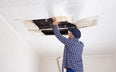
For almost every residential situation, you want an air purifier, not an air scrubber. Air scrubbers are commercial-grade equipment built for active restoration sites, mold remediation jobs, and industrial spaces — heavy, loud, designed to be wheeled in for a few weeks and wheeled out. Air purifiers are built for continuous home use: quieter, more efficient, designed to run 24/7 in living spaces.
If you're looking at a HEPA air scrubber because you have a mold or air quality concern at home, you almost certainly want a residential HEPA air purifier instead. The filtration is the same. The form factor, noise level, and price are dramatically different.
Are you a contractor, restoration professional, or DIY mold remediator looking for commercial equipment? This page is written for homeowners and renters. For commercial-grade negative air machines, restoration HEPA units, and industrial scrubbers, check suppliers like Aramsco, Home Depot's rental and equipment section, or brands like Dri-Eaz, AlorAir, and B-Air. Oransi doesn't make commercial restoration equipment.
"Air scrubber" and "air purifier" sound like two ways of saying the same thing. They aren't. Both clean indoor air, both can use HEPA filtration, and both have legitimate uses — but they're built for different jobs, for different users, in different environments. Picking the wrong category can mean buying a $1,500 commercial unit when a $200 home purifier would do the job better, or buying a quiet bedroom purifier when what you actually need is industrial airflow for an active restoration site.
This guide walks through the difference, when each one makes sense, and which one fits your situation. We'll be specific: if you're a homeowner with allergies, mold concerns, or a smoker in the house, we'll point you to an air purifier and explain why. If you have a job that genuinely needs scrubber-grade equipment, we'll tell you that too and point you elsewhere.
Air scrubber vs. air purifier: what's actually different
Air scrubber
What it is: Commercial-grade air cleaning equipment, originally developed for industrial gas removal and now widely used on restoration job sites.
Built for: Mold remediation, water damage cleanup, fire damage restoration, construction dust containment, asbestos abatement.
Typical use: Wheeled into an active job site, run at full power for days or weeks, then removed. Often used with ducting to create negative air pressure that contains contamination.
Form factor: Heavy (40–80+ lbs), loud (70+ dBA at full speed), industrial appearance, daisy-chain power outlets for connecting multiple units.
Price range: $400 to $2,500+ for commercial models.
Air purifier
What it is: Residential or light-commercial air cleaning equipment, designed for continuous use in living and working spaces.
Built for: Allergens, pet dander, dust, smoke, pollen, mold spores, odors, VOCs.
Typical use: Set up in a bedroom, living room, office, or open-plan area. Runs 24/7 for years.
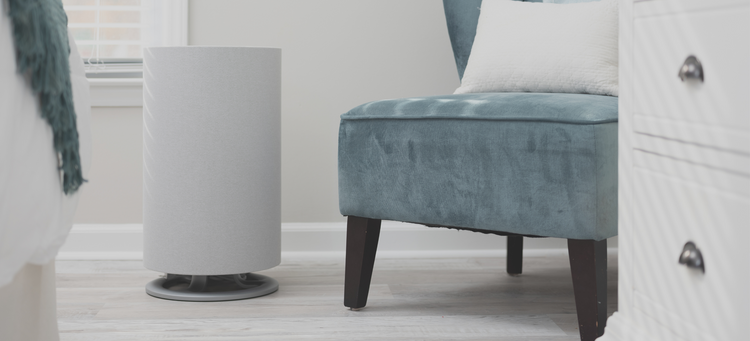
Form factor: Light enough to move room to room (10–25 lbs), quiet enough for bedrooms (often 23–30 dBA on low), residential-friendly appearance.
Price range: $150 to $850 for high-quality residential units.
Both can use True HEPA filtration. Both can include activated carbon for odors. The technology overlaps considerably. The application doesn't.
Side-by-side: when each one is the right choice
| Specification | Air scrubber | Air purifier |
|---|---|---|
| Primary user | Contractors, restoration pros | Homeowners, renters, offices |
| Filtration | HEPA + optional carbon, replaceable pre-filters | True HEPA + activated carbon |
| Airflow (CFM) | 500–2,000+ CFM | 100–600 CFM |
| Noise level | 65–80+ dBA (loud) | 20–62 dBA (whisper to dishwasher) |
| Weight | 40–80+ lbs | 10–25 lbs |
| Intended runtime | Days to weeks (project duration) | 24/7 continuous, year after year |
| Ducting | Often used with flex duct for negative air | None — moves air within the room |
| Energy use | High — built for power, not efficiency | Low — many are ENERGY STAR certified |
| Right for active mold remediation | Yes — captures spores released during demolition | No — not built for that volume of contamination |
| Right for ongoing home mold management | No — too loud, too power-hungry for continuous use | Yes — designed for this exact use case |
| Right for allergies, pets, smoke, daily air quality | No | Yes |
Which one do you need?
You need an air scrubber if:
- You're actively remediating mold — opening up walls, removing drywall, disturbing colonies that will release massive spore loads
- You're doing water damage restoration after a flood or leak
- You're handling fire damage cleanup with heavy soot and smoke residue
- You're managing construction or renovation dust in an occupied building
- You're doing asbestos or lead abatement (with appropriate professional credentials)
- You need to create negative air pressure to contain contamination in a specific area
All of these are short-term project work that benefits from massive airflow, industrial-grade filtration, and the ability to duct contaminated air out of a contained space. Oransi doesn't make this category of product. For these applications, look at brands like Dri-Eaz, AlorAir, B-Air, Abatement Technologies, or rent from a restoration supplier.
You need an air purifier if:
- You have allergies, asthma, or other respiratory conditions and want cleaner air in your bedroom or living space
- You have pets and want to manage dander, hair, and odors
- You're a smoker (or live with one) and want to keep smoke and odors under control
- You have ongoing mold concerns after the active remediation is done — you've fixed the moisture source and the visible mold, and now you want to keep spore counts low
- You live in an area affected by wildfire smoke, pollen, or industrial pollution
- You're concerned about VOCs, formaldehyde, or off-gassing from new furniture, paint, or construction
- You want year-round clean indoor air as a baseline health investment
All of these are long-term continuous needs where quiet operation, energy efficiency, and a residential-friendly form factor matter. This is what air purifiers are built for.
Do I need an air scrubber for mold?
This is one of the most common reasons people search for air scrubbers — and it's the question where the right answer depends most on what stage you're at.
During active remediation — when mold is being physically removed, walls opened up, or contaminated materials cut and disposed of — yes, you want air scrubber-level airflow and HEPA filtration. The volume of spores released during demolition is far higher than residential equipment can keep up with. Most mold remediation companies bring their own scrubbers; if you're doing DIY remediation on a small area, you can rent a scrubber from a tool rental supplier for the duration of the work.
After remediation is complete — once the visible mold is gone and the moisture source is fixed — you no longer need scrubber-grade equipment. What you need is a residential HEPA air purifier running continuously to capture the residual airborne spores and any new spores that get tracked in or grown from minor moisture events.
For ongoing mold management without active remediation — for example, you live in a humid climate and want to minimize ambient mold spore counts — you want a HEPA air purifier paired with a dehumidifier. Read our full guide on dehumidifiers and air purifiers for mold.
The mistake most homeowners make is buying a commercial air scrubber for ongoing mold management at home. The unit is too loud to run continuously, too power-hungry to leave on, and uses replacement filters that aren't designed for year-round residential use. People end up turning it off after a week, defeating the purpose.
What about a HEPA air scrubber for home use?
The phrase "HEPA air scrubber for home" comes up a lot — usually from people who've heard the term "air scrubber" in the context of mold or restoration and are looking for the residential version. The honest answer: what you're looking for is a HEPA air purifier. The "scrubbing" is the HEPA filter doing its job; the filtration technology is identical between a commercial scrubber and a residential purifier. What changes is everything around the filter — the fan size, the noise level, the form factor, the price, and the expected lifespan of continuous use.
For residential mold or allergy applications, three Oransi units handle the same filtration job a commercial HEPA scrubber would handle, in a form factor designed for your living space:
- For a bedroom or small office (up to 300 sq ft): AirMend™ 150HB. HEPA filtration, 30–60 dBA, quiet enough to sleep next to. Featured in NYT Wirecutter.
- For a living room or larger space (up to 800 sq ft): AirMend™ 270HB. Same HEPA technology, scaled up for larger rooms.
- For an open-plan area or basement (up to 1,361 sq ft): Mod+. HEPA + activated carbon. This is what people are usually trying to find when they search for a "residential HEPA air scrubber" — large coverage, serious filtration, but built for continuous home use.
All three are AHAM Verified for CADR, certified, and use Oransi-designed motors that deliver high airflow at lower noise levels than typical commercial scrubbers.
A note on ozone-generating "air scrubbers"
Not every product marketed as an "air scrubber" uses HEPA filtration. Some — particularly older models and some "smoke eater" units — generate ozone as an active air-modification chemical. Ozone reacts with odor molecules and some pathogens, which is why these units exist. But ozone is a respiratory irritant. The EPA, ALA, and CARB all recommend against ozone-generating air cleaners in occupied spaces. California specifically bans most ozone-generating air purifiers above a certain emission level.
If you're looking at a product called an "air scrubber" or "smoke eater" for residential use, check whether it generates ozone. If it does, don't use it in occupied living space. All Oransi purifiers are CARB-certified ozone-safe — we don't use ionization, ozone generation, or any other active chemical air treatment. Just mechanical HEPA and activated carbon filtration.
Frequently asked questions
Is an air scrubber the same as an air purifier?
No, but the line between them is blurry. Both clean indoor air, both can use HEPA filtration, and both have similar technology at the filter stage. The difference is application: air scrubbers are commercial-grade equipment built for active job sites (mold remediation, water damage, construction), while air purifiers are residential equipment built for continuous use in homes and offices. Air scrubbers are louder, heavier, more powerful, and more expensive. Air purifiers are quieter, more efficient, and designed to run 24/7 in living spaces.
What does a HEPA air scrubber do?
A HEPA air scrubber pulls contaminated air through a True HEPA filter that captures 99.97% of particles 0.3 microns and larger — including dust, mold spores, pollen, smoke particles, and most other airborne contaminants. Commercial scrubbers move much more air than residential purifiers (500–2,000+ CFM versus 100–600 CFM) and are often used with ducting to create negative air pressure that contains contamination in a work area.
Do I need a HEPA air scrubber for mold at home?
Probably not. During active mold remediation — when you're physically removing mold from walls, floors, or ceilings — yes, an air scrubber is the right tool. After remediation is complete, or for ongoing mold spore management without active demolition, a residential HEPA air purifier does the same filtration job in a form factor designed for continuous home use. Most homeowners who buy commercial air scrubbers for ongoing mold management end up turning them off because they're too loud to live with.
Can I use an air scrubber in my house?
You can, but you probably don't want to. Air scrubbers run at 65–80+ dBA, weigh 40–80+ lbs, use significant electricity, and aren't designed for the continuous low-noise operation that makes residential air quality equipment useful. A properly sized HEPA air purifier will give you the same filtration with a fraction of the noise, weight, and power consumption.
What's the difference between an air scrubber and a negative air machine?
They're often the same equipment used differently. An air scrubber simply cleans the air in a space. When you connect that same scrubber to flex ducting and route the output outside the contaminated area, you create negative air pressure — air flows into the space but can only exit through the scrubber's filter, which prevents contamination from spreading. The same physical machine can do both jobs depending on how it's set up.
How much does an air scrubber cost?
Commercial air scrubbers range from about $400 for entry-level units to $2,500+ for high-end commercial models. Restoration-grade equipment from brands like Dri-Eaz, AlorAir, and B-Air typically falls in the $600–$1,500 range. By comparison, high-quality residential HEPA air purifiers run $150–$850 depending on room size and features.
Are air scrubbers worth it for home use?
Only in specific situations. If you're doing your own mold remediation, water damage cleanup, or dusty renovation work, renting an air scrubber for the duration of the project makes sense. For ongoing air quality concerns — allergies, pets, smoke, baseline mold management — a residential HEPA air purifier is better value, quieter, and more practical.
Where can I rent or buy an air scrubber?
For rentals, check tool rental sections at Home Depot, Lowe's, or local restoration equipment suppliers. For purchase, restoration suppliers like Aramsco, Jon-Don, and HomeDepotPro carry commercial brands. Oransi doesn't make commercial restoration equipment — we make residential and light-commercial air purifiers, which is a different category of product.